
What Is Cloud Telephony? A Complete Guide for Businesses
Learn what cloud telephony is, how it works using VoIP, and its key benefits like cost savings and scalability. Explore features like IVR, call recording, and C

Updated On :
February 11, 2026

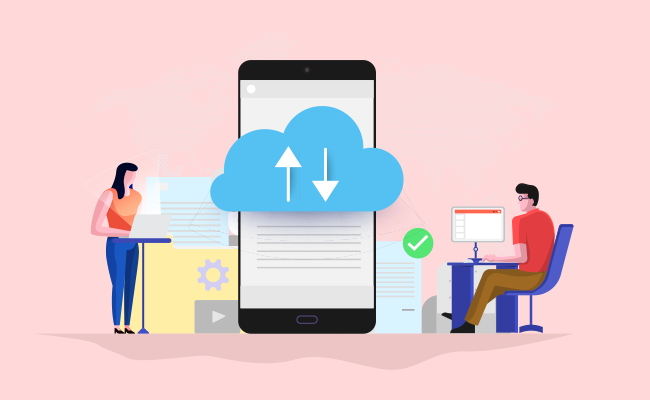
When everything is shifting to the cloud, why not telephony? Cloud telephony basically involves transferring your PBX from your office to the cloud. Cloud telephony, often known as cloud calling, is a sort of unified communications as a service (UCaaS) that provides voice communication services via a third-party host. Private branch exchange (PBX)-style enterprise telephone systems are no longer necessary due to UCaaS. Services for cloud telephony can be web- or application-based. Business communications have never been the same since the introduction of cloud phone services. A few characteristics of cloud telephony include:
- Secure communication
- Smooth scaling
- Call recording options are available
- Frequent software updates
What Is Cloud Telephony?
Cloud telephony is also referred to as hosted telephony or internet telephony. It describes a communication system that uses cloud computing infrastructure and runs over the internet. Cloud telephony uses Voice over Internet Protocol (VoIP) technology to transfer voice signals in the form of digital packets across an IP network, in contrast to traditional telephony systems that rely on physical telephone lines.
It streamlines communication infrastructure for enterprises by eliminating the need for complicated on-premises hardware by utilizing the power of the cloud. It offers a wide variety of features and functionalities, all controlled through a web-based interface, including virtual phone numbers, interactive voice response (IVR), call routing, call recording, as well as voicemail.
Evolution & the Introduction of the Cloud in Telephony
Since Alexander Graham Bell created the telephone, telephony has advanced significantly. For voice signal transmission, conventional telecommunication systems used copper cables and actual exchanges. The emergence of the internet and technological advancements, however, made a shift toward digital communication unavoidable. An important turning point in the development of communication occurred with the integration of the cloud into telephony. Businesses were able to make use of the advantages of cloud technology, including cost savings, flexibility, and accessibility, by using it as a scalable and reliable platform for telephonic services. Businesses were able to quickly and easily respond to shifting communication needs by moving phone services to the cloud.
The market for cloud telephony worldwide was estimated at $13.24 billion in 2020 and is projected to reach $40.5 billion by 2026, expanding at a CAGR of 20.9% over the forecast period. Small and medium-sized businesses (SMEs) have embraced cloud telephony quickly owing to its affordability and scalability.

Key Components of Cloud Telephony
1. VoIP technology in cloud telephony
Cloud telephony is built on Voice over Internet Protocol (VoIP), which is its core technology. It enables voice transmission over IP networks by converting analog voice impulses into digital packets. VoIP technology makes it possible to make crystal-clear and high-quality voice calls. It also provides extra capabilities like video conferencing, instant messaging, and collaboration tools. VoIP technology makes it easier to convert between various signaling and transport protocols used in IP networks and traditional telephony systems.
It enables seamless integration of PSTN (Public Switched Telephone Network) and cloud telephony services with the current telephony infrastructure. VoIP technology does away with the requirement for separate voice and data networks as it is based on Internet protocols. This combination lowers the infrastructure costs and maintenance costs linked to conventional telephone systems. Furthermore, VoIP frequently offers long-distance and international calling rates that are much lower than those offered by traditional phone systems. This is the reason why businesses prefer cloud call center software, which is equipped with VOIP.
2. Network and infrastructure requirements
Strong cloud infrastructure is necessary for cloud telephony to function. Service providers set up data centers that contain the required technology and software for managing voice traffic. For seamless communication as well as to guarantee low latency and low loss of data, dependable network connectivity, such as broadband internet or dedicated leased lines, is essential. Networking tools like switches and routers make it easier to send voice packets across the Internet. They manage data packet routing, ensuring that the packets efficiently arrive at their designated location.
For speech traffic to be prioritized and latency to be kept to a minimum, these devices must be correctly configured and optimized. To guard against unwanted access and potential dangers, cloud telephony systems need strong security measures. In order to monitor and manage network traffic and guard against unwanted access to the telephone infrastructure, firewalls are crucial. To protect against prospective attacks, additional security measures like intrusion detection and prevention systems (IDS/IPS) should be put in place.
Bandwidth and QoS Requirements
Suggestion: Add a table detailing bandwidth requirements per call for different codecs (e.g., G.711, G.729), along with acceptable thresholds for latency, jitter, and packet loss to ensure high-quality calls.
3. Integration with existing communication systems
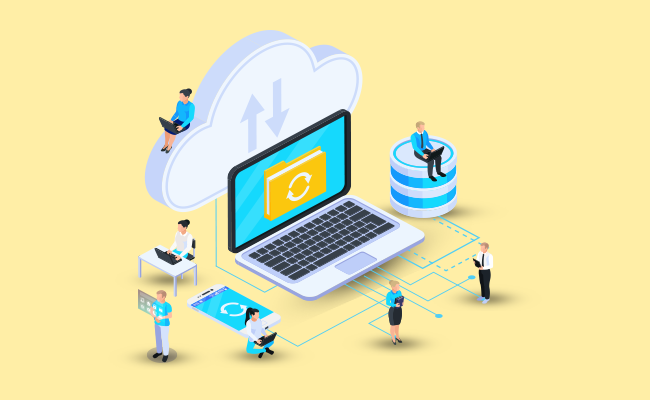
Private branch exchanges (PBX), customer relationship management (CRM) platforms, and call center software can all be easily linked with cloud telephony solutions. Enterprises may use existing investments to their advantage while implementing advanced cloud-based telephony solutions due to this integration. With the integration of cloud telephony with mobile devices, employees can use their mobile devices as extensions of the office phone system. Individuals can place and receive business calls on their mobile devices using mobile apps, displaying the corporate phone number rather than their personal numbers.
Through this integration, remote work is made easier, mobility is improved, and employees are always connected to the organization’s communication network. Not to miss out on the fact that it is also possible to automate procedures and boost productivity. It can be done by integrating cloud telephony with business applications like help desk software, booking and ticketing systems, and workflow management tools. For example, the telephone system can automatically create a support ticket and route the call to the proper agent or department when a customer contacts for support. This integration optimizes business procedures, lowers errors, and eliminates the burden of manual work.
Benefits of Cloud Telephony
Let’s explore the key benefits of cloud telephony, highlighting how it revolutionizes the way organizations connect and collaborate.
1. Cost savings as compared to traditional telephony
Traditional phone systems can be replaced with cloud telephony
at a lower cost since there is no longer a requirement for costly on-site gear and maintenance. Businesses can dramatically lower their capital expenditures by utilizing the cloud’s power. As cloud telephony uses a subscription-based business model, businesses may only pay for the services they actually use, which makes it both extremely scalable and cost-effective. Additionally, the cloud infrastructure reduces the expenses related to dedicated phone lines, long-distance fees, and maintenance costs, producing significant long-term savings.
TCO Comparison: Cloud Telephony vs. On-Premise PBX
Suggestion: Add a comparison table breaking down costs for both systems, including CapEx (hardware, installation) and OpEx (licensing, maintenance, call charges, IT staff), to illustrate the Total Cost of Ownership (TCO) difference.
2. Scalability and flexibility for business growth
Scalability and flexibility are two of cloud telephony’s primary benefits. Traditional telephone systems frequently find it difficult to keep up with the changing requirements of an expanding organization. Cloud telephony, in comparison, can easily scale up or down based on demand, ensuring smooth communication regardless of the size of the business. It delivers unmatched adaptability, enabling organizations to adapt and thrive in dynamic situations, whether it’s introducing or eliminating phone lines, extending to new locations, or handling seasonal variances.
3. Enhanced functionality and features
The enhanced features and functionality that cloud telephony offers are much beyond those of conventional telephony systems. Businesses can take advantage of call analytics, sophisticated call routing, auto-attendant, voicemail-to-email transcription, and other intelligent, distinctive characteristics. Organizations can design customized call flows using Interactive Voice Response (IVR) systems, improving customer service and streamlining call handling. Call forwarding, call recording, and conference calling are additional features that enable teams to interact effectively, boosting productivity and customer happiness.
4. Increased mobility and remote access
Businesses require communication solutions that support mobility and remote accessibility in today’s mobile-driven world. Professionals can stay connected and productive at all times and from any location owing to cloud telephony. Employees no longer require real desk phones as they may place and receive business calls using their smartphones or laptops by utilizing mobile applications. With this level of mobility, employees may continue to be productive and responsive while travelling for work, facilitating remote work, and ensuring uninterrupted interaction.
5. Integration of additional cloud-based services
An integrated and simplified communication ecosystem is produced by the seamless integration of cloud telephony with other cloud-based services. Businesses can provide personalized customer experiences due to integration with customer relationship management (CRM) systems. This enables automatic call tracking, screen popping, and access to client information. Communication and collaboration between departments and remote teams are improved. This can be achieved through integration with collaboration technologies, such as team messaging platforms or video conferencing systems. The capacity to integrate with different corporate apps boosts productivity and efficiency while establishing a smooth workflow. Thus, team members can smoothly:
- Work with their colleagues
- Manage customers
- Analyze current data
- Collect reviews
- Line up their progress with the KPIs of their company
Core Features of Cloud Telephony
1. Call forwarding and routing
The comprehensive call routing and forwarding functions of cloud telephony are one of its core characteristics. With the use of this tool, companies can direct incoming calls to the most suitable recipient, such as specific teams, departments, or personnel. Cloud telephony makes certain that consumers are efficiently linked to the correct employees by intelligently directing calls, enhancing customer satisfaction, and cutting down on call handling time.
2. IVR (Interactive Voice Response) systems
IVR systems, which give callers a self-service menu to browse through options, are a crucial component of cloud telephony. It is capable of obtaining caller information, routing calls in accordance with established rules, and delivering automated responses or call-back requests. Businesses that use IVR systems can handle a high volume of incoming calls, cut down on wait times, and guarantee that callers are connected with the right resources.

3. Call recording and monitoring
Enhanced call recording and monitoring capabilities are provided by cloud telephony solutions, allowing businesses to record and retain both incoming and outgoing calls for quality control, compliance, and training needs. Call recording for business provides an accurate record of conversations, which enables businesses to monitor customer interactions, evaluate agent performance, and settle disputes. Additionally, it improves employee training programs and makes it easier to comply with industry requirements.
4. Voicemail and voicemail-to-email
By enabling customers to receive voicemails as digital audio files immediately in their email inbox, cloud telephony streamlines voicemail management. The ability to listen to voicemail messages whenever and wherever you want is made possible by this function. Important messages won’t be missed thanks to voicemail-to-email capability, which also makes voicemail sharing and archiving simple.
5. Virtual receptionist
With the use of cloud telephony, a virtual receptionist serves as an automated attendant that welcomes callers, answers their questions, and helps with call routing. This function does away with the requirement for a physical receptionist and guarantees constant, expert call handling. Multiple calls can be handled simultaneously by virtual receptionists, increasing efficiency and improving the overall caller experience.
6. Tools for collaboration and conference calls
No matter where team members are physically located, conference calling and collaboration are possible with cloud telephony. Using tools like voice conferencing, video conferencing, screen sharing, and document collaboration, businesses can easily hold virtual meetings, webinars, and training sessions. These tools promote real-time interaction, teamwork, and knowledge exchange, which boosts output and lowers trip expenses.
7. SMS and MMS messaging capabilities
Cloud telephony systems provide SMS and MMS messaging capabilities in addition to voice call capabilities, allowing organizations to send and receive text messages as well as multimedia information. Enterprises can use this tool, including the WhatsApp Business Suite, to interact with consumers via their preferred method of communication, send out vital information and reminders for appointments, and run marketing campaigns. SMS and MMS messaging can increase client engagement, stimulate response rates, and offer a practical communication method for information that needs to be shared quickly.
Security and Compliance in Cloud Telephony
When you move your business communications to the cloud, security and compliance become critical. A reliable cloud telephony provider must offer robust controls to protect your data and meet regulatory standards.
Key Security and Compliance Considerations
Suggestion: Create a section with subheadings for:
- Data Encryption: Explain encryption standards for data in transit (TLS/SRTP) and at rest.
- Regulatory Compliance: Detail compliance with standards like GDPR, HIPAA, PCI-DSS, and regulations from TRAI/DoT in India.
- Access Controls: Describe role-based access control (RBAC), multi-factor authentication (MFA), and audit logging.
- Data Residency: Clarify where customer data and call recordings are stored.
- Certifications: List any relevant security certifications like ISO 27001 or SOC 2.
For more details, you can visit our Security and Compliance pages.
Use Cases and Applications
1. Small, medium, and large businesses
Cloud telephony levels the playing field for businesses of all sizes. It provides cost-effective and scalable communication solutions, enabling small businesses to establish a professional image with features like a virtual phone number, IVR, and call forwarding. Medium and large enterprises can benefit from a centralized business call management system, easy scalability, and the ability to integrate telephony systems with their existing infrastructure.
2. Contact center and customer support
Cloud telephony is an ideal solution for contact center software and customer support teams. It enables efficient call routing, queue management, and detailed reporting, improving productivity and customer satisfaction. Integration with CRM systems allows agents to access customer information, resulting in personalized interactions.
3. Sales and marketing teams
Cloud telephony empowers sales and marketing teams with advanced features like call analytics, call tracking, and recording. These features enable businesses to gain valuable insights into customer interactions, measure campaign effectiveness, and optimize sales and marketing strategies.
4. Remote and distributed workforce
With the rise of remote work, cloud telephony enables businesses to connect and manage their distributed workforce seamlessly. It provides employees with virtual extensions, ensuring calls can be routed to their preferred devices, whether they are in the office or working remotely.
5. Multi-location and global enterprises
Multi-location businesses, such as retail chains, hospitality groups, and service providers with global operations, greatly benefit from cloud telephony. It allows them to manage their communication centrally, ensuring seamless collaboration and consistent customer experiences across all locations.
MyOperator Case Studies
The Amazon-MyOperator success story
Amazon, a global e-commerce leader, wanted to simplify its hiring process. With the help of MyOperator’s cloud telephony solution, they were able to streamline their recruitment process.
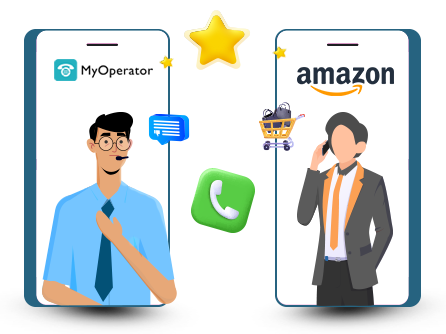
MyOperator, an IVR service provider, provided a centralized virtual mobile number for job applications, a multi-level IVR system for small businesses with state options, and API integration with real-time updates.
Key Results:
- Simplified hiring process for Amazon
- Easy access to relevant data
- Increased connection time with candidates
- State-by-state distribution of applicants
- Equal distribution of candidates among HR team members
- Effective call transfers with real-time updates
- Significant reduction in manual tasks for HR
Click here to read more: https://myoperator.com/amazon-myoperator-case-study
The KV Developers-MyOperator success story
KV Developers, a real estate company, faced challenges with high call drop rates and the inability to track customer and prospect calls for effective follow-up. MyOperator’s toll-free number and IVR solution helped KV Developers overcome these challenges. With the implementation of MyOperator’s solution, KV Developers minimized call drops and achieved a 100% response rate on their business calls.
V-Trans-MyOperator success story
V-Trans, a cargo management and logistics company, achieved a remarkable 65% increase in customer retention by utilizing MyOperator’s virtual number and IVR, a must-have for any business. MyOperator’s virtual number and IVR solutions played a crucial role in V-Trans’s success by enabling a 100% response rate to customer calls, which in turn led to improved customer retention.
Implementation Considerations
Consider the following when evaluating your options if you want to switch to a cloud telephony provider.
1. Choosing a cloud telephony provider
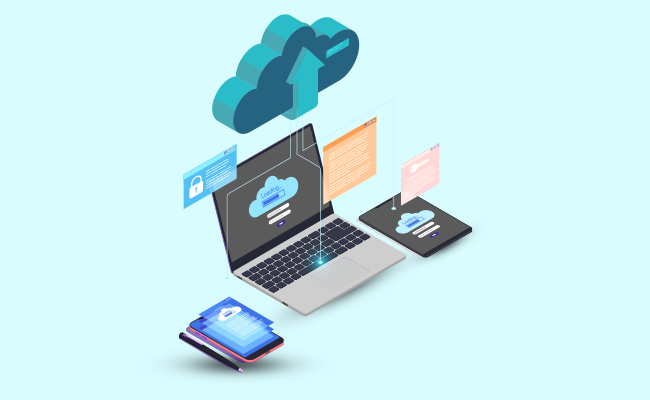
Step 1: Research and compare providers
- Research and compare multiple cloud telephony providers
- Evaluate their features, pricing, and scalability options
- Consider their reputation, reliability, and customer reviews
Step 2: Assess compatibility and support
- Assess their compatibility with your business needs and objectives
- Look for providers with excellent customer support and technical assistance
- Review their Service Level Agreements (SLAs) for uptime guarantees and support response times.
2. Network and bandwidth requirements
Evaluate your existing network infrastructure and bandwidth capacity. Ensure that your network can handle the increased traffic and data transfers. Consider implementing a dedicated internet connection for voice traffic. Check if the cloud telephony provider has specific network requirements or recommendations. Test the network and bandwidth capabilities before deploying the system.
3. Security and data privacy considerations
Assess the security measures offered by the cloud telephony provider. Verify if they comply with industry standards and regulations (e.g., GDPR). Ensure that your data is encrypted and protected during transmission and storage. Request information about data recovery and disaster recovery processes as well. Understand the provider’s data privacy policies and how they handle customer data.
4. Integration with existing software and systems
Identify the software and systems currently used in your organization. Confirm if the cloud telephony solution can integrate with your existing infrastructure. Evaluate the compatibility and interoperability of the telephony provider’s APIs or connectors. Determine if the provider offers pre-built integrations with commonly used applications. Plan for any necessary modifications or customization to ensure seamless integration.
For technical details, review our API documentation.
5. Training and support for users
Inquire about the training resources and materials provided by the cloud telephony provider. Assess if they offer onboarding sessions and user guides for your team. Check the availability and responsiveness of their customer support channels. Determine if the provider offers 24/7 technical assistance or dedicated account managers. Consider the scalability and flexibility of training and support options as your business grows.
Future Trends and Developments
As technology develops, several exciting new developments and trends are influencing the future of cloud telephony. This enables businesses to improve communication and provide amazing customer experiences. Let’s explore some of those:
1. AI and Natural Language Processing advances
The future of cloud telephony is about to transform due to developments in artificial intelligence and natural language processing. More sophisticated voice recognition will be possible thanks to AI-powered technology. This will provide better call routing and more personalized interactions. The use of natural language processing will improve comprehension of client inquiries and enable thoughtful responses. By 2023, voice assistants with AI will be able to handle more than 8 billion calls annually, according to Juniper Research. Cloud telephony solutions will become even more effective and capable of delivering seamless and natural conversation experiences as AI and NLP continue to develop.
2. Integration with other emerging technologies
The integration of cloud telephony with other advanced technologies, such as chatbots and virtual assistants, will increase its functionalities. Businesses can provide interactive voice response (IVR) systems and self-service alternatives to customers by merging these technologies. Chatbots coupled with cloud telephony platforms can handle a sizable amount of customer inquiries on their own, increasing productivity and reducing wait times.
On the other hand, virtual assistants allow for more intuitive and natural interactions by performing difficult tasks and offering personalized assistance. According to IBM, chatbots connected to cloud telephony platforms may handle up to 80% of consumer inquiries on their own. According to Statista, the virtual assistant market will be worth $19.6 billion by 2025. Voice-enabled interactions are possible for the automation of smart homes and offices due to cloud telephony and IoT security. Cloud telephony improved analytics and reporting capabilities.

3. Enhanced analytics and reporting capabilities
Deeper insights into communication processes will be available to enterprises due to improved analytics and reporting capabilities. Businesses will be able to track key performance indicators (KPIs) and pinpoint areas for improvement thanks to real-time analytics. These data points can aid in call routing optimization, agent performance improvement, and bettering overall client experiences. Additionally, sophisticated reporting tools will offer thorough information on call numbers, client happiness, and call outcomes, enabling businesses to make data-driven decisions and improve their communication strategies. By 2025, the market for speech analytics is anticipated to grow to $2.69 billion, according to MarketsandMarkets.
4. Industry-specific applications and customization options
To meet the particular requirements of many industries, it will continue to provide sector-specific applications and customization choices. Healthcare organizations can use cloud telephony, for instance, to schedule appointments, remind patients to come in, and provide telemedicine services. Retail firms can use it to enable click-to-call features for customer service, while financial institutions can use it to handle calls securely and compliantly. Given the customization options offered by cloud telephony systems, organizations may adjust the technology to their own needs. Also, seamlessly integrate it with their current workflows and systems.

Challenges and Considerations
Let’s explore the challenges and considerations associated with cloud telephony:
1. Uptime and reliability concerns
Providing dependable service and minimizing downtime are two of the main issues with cloud telephony. Since the system depends on internet access, any problems or outages may affect the availability and quality of calls. Businesses must pick a trustworthy cloud telephony supplier with a stable infrastructure and redundancy procedures in place. It is important to properly analyze service-level agreements (SLAs) to understand uptime guarantees and support response times.
2. Call clarity and service quality
For effective communication, maintaining great call quality and clarity is essential. Cloud telephony is highly dependent on the network and internet speed, both of which might change. Call quality can be impacted by elements like delay, jitter, and packet loss. Businesses need to evaluate their network structure and guarantee there is enough bandwidth to accommodate voice traffic. Voice traffic prioritization and Quality of Service (QoS) implementation can assist in minimizing potential problems.
3. Legal and regulatory compliance considerations
When deploying cloud telephony, compliance with legal standards and regulatory requirements is essential. Especially in sectors with stringent data protection and privacy restrictions. Organizations must make sure that their cloud telephony provider complies with all applicable compliance standards, including the General Data Protection Regulation (GDPR) and any rules that are unique to their business. To minimize risks, it is important to consider data encryption, secure storage, and explicit data ownership regulations.

4. Migration & transition from legacy systems
It takes careful planning and execution to transition from traditional telephone systems to cloud telephone solutions. Organizations must think about how the new cloud-based solution will work with their current infrastructure, including their endpoints and phone systems. It might require a total revamp, a phased migration, or merging legacy systems with cloud telephony. Professionals should receive adequate instruction, and effective change management techniques should be in place to help them integrate the new system efficiently.
Glossary of Terms
- VoIP (Voice over Internet Protocol): The technology that converts your voice into a digital signal, allowing you to make a call directly from a computer or another data-driven device.
- PBX (Private Branch Exchange): A private telephone network used within a company or organization.
- UCaaS (Unified Communications as a Service): A cloud-based delivery model that offers a variety of communication and collaboration applications and services.
- IVR (Interactive Voice Response): An automated telephony system that interacts with callers, gathers information, and routes calls to the appropriate recipient.
- QoS (Quality of Service): A set of technologies that work on a network to guarantee its ability to reliably run high-priority applications and traffic under limited network capacity.
- SLA (Service Level Agreement): A commitment between a service provider and a client, defining the level of service expected from the provider.
To Sum Up:
Key points that were covered in this article include:
- Key components of cloud telephony: VoIP technology and integration with existing communication systems
- Benefits of cloud telephony: Cost savings, scalability, enhanced functionality, and increased mobility
- Core features of cloud telephony: Call routing, IVR calling system, call recording, virtual receptionist
- Use cases and applications across various industries
- Implementation considerations: AI integration, analytics enhancement, customization
- Real-world case studies demonstrating the effectiveness
- Challenges in reliability, quality, compliance, and migration
- Cloud telephony as a transformative solution, shaping the future of communication for organizations
Thus, looking ahead, cloud telephony has a bright future with lots of room for growth and innovation. We may anticipate that cloud telephony will become much more complex and adaptable as technology develops and internet connectivity spreads further. These features will be further enhanced by integration with the latest technologies, like:
- Artificial intelligence (AI)
- The Internet of Things (IoT)
This will provide more tailored and relevant communication experiences. Moreover, the emergence of 5G networks will have a big impact on cloud telephony since they provide higher speeds and reduced latency, enabling real-time communication and supporting more demanding applications. This will open up new possibilities, including high-definition phone and video communications, augmented reality (AR) and virtual reality (VR) integration, and seamless connection with other cloud-based services.
Cloud telephony has virtually unlimited potential for growth and development. This game-changing technology is redefining communication and creating new opportunities for both people and businesses. Cloud telephony will continue to develop with continuing improvements and the incorporation of new technology, empowering organizations, boosting collaboration, and influencing how we interact in the digital age.
Join for the blogs and insights



.avif)



.webp)


