
6 Tips to Thrive as a Remote Worker
Is remote working the right option for you? Find out and explore the pros, cons, and challenges of remote working along with 6 tips to thrive as a remote worker.

Updated On :
February 11, 2026


Young people are on the rise, and they are taking over tomorrow's workforce landscape. Companies that want to attract the best and the brightest talent should seriously consider embracing remote working.
According to a Forbes report, nearly 75% of professionals and entrepreneurs consider remote working as the new normal and prefer coworking spaces.
It is clear that remote work has become more prevalent in recent years, especially among millennials. But why? What would make you want to work remotely, and what are the benefits of working from afar? These are the questions that drive you down to conclude that working remotely is your cup of tea or not.
Another thing is, it is not as undemanding as it looks. There are certain challenges associated with all of the advantages. It's critical to understand what they are so you can make the best professional decisions possible. This blog will explain how it works, why people like it, and how to get ready to work from home in the future.
We would be enumerating various aspects in this article:
- The pros and cons of remote working.
- What are the challenges of working remotely?
- Six tips to thrive as a remote worker.
Remote Working Pros
Thanks to the digital age we live in and the availability of all sorts of remote working tools, it's easy to get started with remote working because you don't have to go through the hassle of finding an office or coworking space. You can work from anywhere, at any time, without having anyone telling you where you can tap away on your keyboard. Here are a few pros of remote working:
Your work is flexible.
You get to make critical decisions about the work you do. It's not just a 9 to 5 job that takes place at a particular location. You can select more essential jobs for you, have more meaning, and are overall more straightforward for you to accomplish.
You can save money on gas, car maintenance, and other car expenses.
The average American spends around $500 per month on their cars per month which is a lot of money. If you were working from home, you would save a lot of money on gas and car maintenance. You could also reduce your commute time and work from home rather than going to a local office.
It's easier to find new job opportunities.
Remote work is becoming more popular, and companies are willing to hire people that live anywhere in the world. Companies want people that can start and contribute right away, not someone stuck in an office. With remote work, you tend to be hired faster, and this is because you can start working from home almost immediately. This helps save the company money because they don't have to pay for an office or an employee to travel around, and they can spend more time working on the most critical project.
Remote working cons
The reasons for working remotely are great, but that doesn't mean it's for everyone. Some challenges come with it as well. Explaining a few of them henceforth:
You have less interaction with co-workers and bosses, and you are responsible for your taxes, benefits, and overall expenses.
Working remotely reduces communication between employees and managers. Because you don't have a set time to meet with your co-workers, it can be hard to have conversations.
If you are working from home as a freelancer or contract worker, you'll be responsible for your taxes and other “office-y” expenses, even if your employer does offer to take care of these for their other employees. Because of this reason, you could end up paying more in taxes and related expenses than other people.
You will have to learn how to manage your own time.
If you're not good at managing your own time, you'll struggle to make the most out of your day. It's essential to learn how to manage your time before you take on remote work.
What are the challenges of working remotely?
Working remotely has its positives, but it does have some challenges. You need to make sure you're prepared for them before you take the leap of working from home.
- You may be giving up a more rewarding job and salary if you're working from home. There is more stress when you work remotely because you have to manage your own time and workload and still do what your employer asks of you to meet their deadlines. Using a simple pay stub generator can help streamline your financial record-keeping, alleviating some of the administrative burdens associated with remote work.
- It could be more laborious for you to meet deadlines because of the lack of communication between employees and employers when working remotely. Because you don't have a set time to meet with your co-workers, it could be unyielding for you to be up to date on what's happening in your company.
- Working remotely could cause you to have less access to resources that you're used to having when working with a company.
- You need to learn how to keep yourself motivated if you're working remotely. If you're not happy with your work, it could be hard for you to stay motivated because you don't have a boss or coworkers around who can inspire you to do better.
Six Tips to Thrive as a Remote Worker
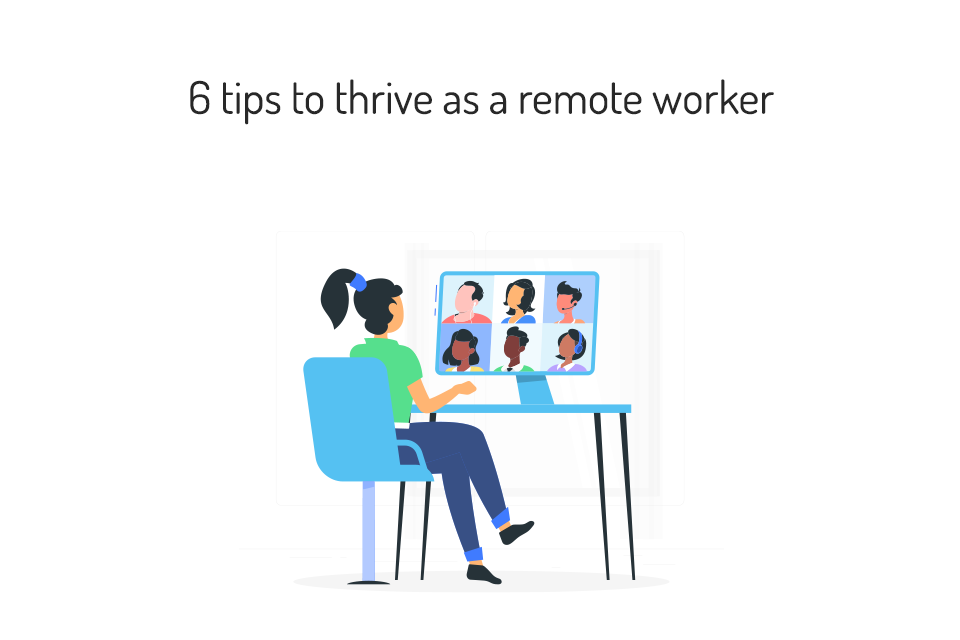
There is no scope for denying the fact that working remotely is an option for many people. The idea of not being cramped to a desk and not conforming to set hours every day gives an added level of freedom that many find appealing.
So here, I will share my best tips with you on how you can stay productive, help your family adjust to the new routine, and make sure you're still able to read a full-length novel along the way! Here we go:
Stay on top of email and messaging.
There is nothing more critical than staying on top of digital communications and staying in sync with what’s going on. The ability to respond to texts, emails, and voicemails as quickly as possible is essential for anyone who works remotely. Try automating those messages so that you can still receive them without the worry of missing them if you're busy. You can find and keep a list of contact details of your colleagues.
For other people/teams, asynchronous communication works well. If it is a viable option for you, go for it!
Consolidate electronic communication.
When you're working remotely, you must define the process for all other communication. Your team, clients, or family should know how and where they can contact you. For example, for your calls, you might be using a call management system, such as call center software and IVR service, to streamline communication. Additionally, having a toll-free number enhances accessibility for your contacts. Integration of cloud call center software ensures seamless connectivity and flexibility. For messaging, you might be using Slack. For video calls, you might be using Zoom. And so on.The point is you must have all the tools for communication in place to stay on top of your work.
Unplug and re-energize.
In today's world where everything is intertwined. It's not uncommon for your friends or family to send you messages or ask for advice throughout the day, which can be distracting. When you are working from home, it's important to unplug and take a break from all those distractions. Unplug time helps you get rid of all that noise and re-energize your brain to get important stuff done.
Build a community.
With the escalation of remote work, it's essential to build a sense of community in your area. With a large group of people in the same area, friendships may be made, and you're bound to have a few local buddies that you can rely on for advice or help in a pinch. So, try to mingle with people in your area, online as well as offline.
Work from a different location.
Whether you work from home or at a coffee shop, there will be times when you feel disconnected from the office. One option to solve this problem is going to an alternate place for a change, a local park for instance. Take time to sit there in a different location and do your work from there. Working from different locations will help you feel rejuvenated and remove the monotonous burden that work sometimes can be!
Go 100% remote or hybrid. It’s up to you.
The benefits of working remotely are clear; you never have to worry about leaving work early and don't have to take time off for your kids to see their grandparents. Not only that, the ability to create your schedule allows you and your family quality time, away from work.
While there can be many benefits, there are also a few challenges you should consider before moving forward with the idea of working remotely. Working from home alone is not easy, and it takes a lot of planning and preparation to work well.
But if you're ready to take on the challenge of working remotely and you've got a good support team in place, you could be thrilled with this work style.
Join for the blogs and insights



.avif)



.webp)


