
The Importance Of Customer Follow-Up In Sales | MyOperator
Why customer follow-up is critical for sales & marketing. Discover expert tips, channels, & strategies to build loyalty, increase conversions, & conversation.

Updated On :
February 11, 2026

Are you keeping in touch with your customers regularly? It is crucial to keep in mind that following up with customers is necessary. Those dealing with customers should not stop after the sale. By executing a follow-up in the sales process with customers, you demonstrate that you are interested in developing a connection with the customer as well as the transaction. Customers frequently stick with a company that shows them care.
Even better, they do not mind becoming passionate supporters of a company that makes an effort to enhance their experience.
76% of customers believe that businesses should be aware of their wants and expectations, according to a Salesforce survey. Businesses can show their dedication to offering exceptional service and immediately resolving any issues by regularly following up with clients. Customers are more likely to stay with the company if they receive a personalized experience that encourages loyalty and trust.
Why Follow-Up Is A Core Part Of Your Strategy?
Follow-up is more than a task — it’s the bridge that connects your marketing efforts with actual customer trust and conversions.
- Marketing goes beyond research and product display; it involves nurturing relationships.
- Follow-up is a key component of marketing, but is often ignored by many businesses.
- It helps build and maintain stronger connections with customers and leads.
- Increases the chances of customers taking action or making a purchase.
- Allows businesses to address customer doubts, questions, or hesitations.
- Eliminates confusion and builds confidence in the buying decision.
- Lack of follow-up makes customers lose interest or forget about your product.
- Missed follow-ups lead potential customers to competitors.
- 65% of customers develop a negative perception of a brand when follow-up is missing.
Customers don’t stay with brands that leave them alone during challenges; follow-up shows care and reliability.
What Is Follow-Up In Marketing?
Follow-up in marketing refers to the ongoing process of engaging with potential customers, leads, or clients after the initial contact has been made. It is essential for creating connections, establishing credibility, and eventually increasing revenue.
Importance Of Follow-Up In Sales
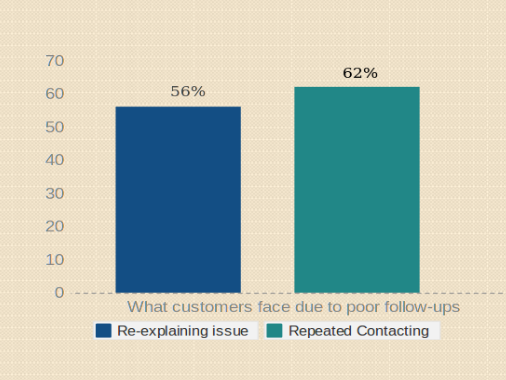
Follow-up in sales is a key component that significantly impacts the success of any marketing campaign. It allows businesses to stay connected with their audience and prospects, creating a lasting impression. Enterprises can show their commitment, answer questions, and give more information by carrying on the conversation after the first exchange. This personal touch improves the client experience in general and raises the possibility that leads will become loyal customers.
Follow-Up In The Sales Process
From the first point of contact to the last deal, follow-up is an essential phase in the sales process. It involves systematically reaching out to prospects through various channels, such as email, phone calls, or personalized messages, to guide them through the buyer’s journey. Effective follow-up ensures that potential leads are nurtured, objections are addressed, and conversions are optimized.
Benefits Of A Strong Follow-Up Strategy
Fulfill customer expectations
When you follow up with customers, you are able to know their preferences and what they are expecting from you. When you are able to understand what your customers want, you are also able to provide them with a quality product. That’s where the skill to know how to follow up with a potential client comes into play. And it provides them with more reason to get your product.
Build customer loyalty
Following up with customers gives the impression that you care about your customers and are available for them. That is why customers stick to your business for a longer period of time, as you are always available. Additionally, proactive follow-ups can encourage customers to provide feedback and write the best review quotes for service, further enhancing trust in your brand.
Make customers feel special.
Well, who doesn’t enjoy special treatment? Being a customer, I enjoy getting all the attention and being treated like a special individual. Whenever my feedback is asked for, it makes me feel valued. So the advantages of follow-up services make customers feel special, and therefore, this increases the reliability process for the customers.
Amplify your word-of-mouth marketing.g
Customers remember you for the rest of their lives, for delivering great customer service. 96% of the customers also agree that customer service is a parameter to determine their choice of brand and also their loyalty towards it. As “follow-up” is a synonym for customer service, your customers will undoubtedly talk about it with others. Hence, there’s a high possibility that your brand might spread among other people without you even knowing about it (and there is nothing like genuine word of mouth). Thus, you achieve easy marketing with the power of follow-up.
Data-Backed Reasons To Follow Up
Improved customer satisfaction
Following up with consumers shows that you value what they do and are concerned about their experience. Bain & Company found that even a 5% increase in client retention rates can increase earnings by 25% to 95%.
Increased customer loyalty
Consistent follow-up interactions support the development of loyalty and trust. As per the objectives of follow-up service, A happy customer is more likely to purchase from you again and recommend your business to others. As per Harvard Business School research, a 5% increase in client loyalty can lead to a 25% to 95% increase in revenue.
Better problem-solving
By following up, you may quickly take care of any difficulties or concerns. According to research by the Harvard Business Review, clients who have their issues fixed swiftly are more inclined to remain loyal to you.
Greater sales conversions
After the initial contact, following up with prospective clients greatly raises sales conversion rates. It takes skill to follow up with a potential client; it requires both dedication and finesse. Make use of multiple channels for communication, customize messages to the needs of the customer, and pay attention to feedback.
By using these techniques, problem-solving becomes an ongoing conversation that guarantees clients will feel supported and appreciated at every stage of the process. According to the National Sales Executive Association, at least five follow-up calls are necessary for 80% of sales.
Key Reasons You Need A Follow-Up Process
- A regular follow-up with customers will give a chance to hear and engage effectively.
- Follow-ups can be a great source to ask customers, “What they want/expect next.”
- Customers usually want a medium to get in touch with the company. Therefore, the follow-up system, including tools like WhatsApp API, enhances this communication.n
- A follow-up call in the sales process is always required after conducting a marketing campaign to the people who have already enquired. You might just get a lead!
- Existing customers receiving follow-ups are more likely to go for the new product than those without
Features Of An Effective Follow-Up Service
- Timeliness: Being quick to respond indicates your appreciation for your customers’ time and your willingness to help
- Personalization: Tailor your messages to individual customers, addressing their specific needs and concerns
- Consistency: Regular follow-up maintains engagement and keeps your brand in the minds of your customers
- Clear Communication: Make sure your messages are understandable, concise, and contain relevant details
- Feedback Collection: Use follow-up to gather feedback, allowing you to continuously improve your products or services
Effective Follow-Up Tips And Techniques
Let’s explore the value of customer follow-up and offer practical advice and methods to help you make the most of it.
Personalize your approach
- Address customers by their names in follow-up communications
- Reference specific details from previous interactions to show you remember them
Be prompt
- Respond to customer inquiries and issues promptly
- Send follow-ups soon after a purchase or interaction to reinforce positive experiences
Use multiple channels
- Reach out to customers through various channels, such as email, phone, or social media.
- Adapt your approach based on customer preferences to increase engagement
Provide valuable information
- Share relevant industry news, tips, or updates that align with customers’ interests.
- Position yourself as a trusted resource, not just a seller
Express gratitude
- Utilize and thank customers for their business, support, or feedback
- Show genuine appreciation to make them feel valued and encourage loyalty
Offer exclusive promotions or discounts
- Provide incentives for customers to engage with your brand again
- Offer special deals or rewards to create a sense of exclusivity.
Seek feedback
- Ask customers for their opinions and suggestions. That’s the key to learn how to follow up with a potential client.t
- Use feedback to improve your products, services, and customer experience
Be proactive in resolving issues
- Address any concerns or complaints promptly and efficiently
- Show empathy and work towards finding satisfactory solutions
Schedule regular check-ins
- Establish a follow-up schedule to maintain consistent communication
- Check in on customers to see how they’re doing and offer any assistance they might need
Personalize offers and recommendations
- Analyze customer data to tailor your recommendations and offers
- Show customers that you understand their specific needs and preferences
Channels And Methods For Customer Follow-Up
1. Email
Pro: Cost-effective, allows for detailed communication.
Con: Can be easily overlooked or end up in spam folders.
If you struggle to come up with the right wording, an AI Follow-Up Email Generator can help you craft personalized and professional emails quickly, making your follow-ups more effective.
2. Phone calls
Pro: Allows for immediate and personal interaction, which is an effective follow-up in marketing.
Con: Time-consuming, and may not be convenient for all customers.
3. Chat platforms
Pro: Real-time communication enables quick issue resolution.
Con: Limited to customers actively engaging on your website or app.
4. SMS
Pro: High open rates, concise messaging.
Con: Limited space for detailed communication.
5. Social media
Pro: Wide reach, fosters engagement.
Con: Requires active monitoring and may lack privacy for sensitive matters.
A Comparison Of Follow-Up Channels
A Sample Sales Follow-Up Cadence
A structured timeline for consistent engagement
An effective follow-up strategy is not random; it is a planned sequence of touchpoints. Here is a sample 10-day cadence for a new lead to give you a framework.
- Day 0 (Initial Contact): Send a personalized email within one hour of the lead showing interest. Reference their specific action (e.g., "Thanks for downloading our e-book on AI in communication").
- Day 2 (Value-Add): Follow up with a valuable resource, like a case study or a relevant blog post. Do not ask for a sale. The goal is to be helpful.
- Day 5 (Phone Call): Make a brief, professional phone call. The objective is to understand their needs better and answer initial questions, not to close the deal.
- Day 7 (Social Media/WhatsApp): Connect on a professional network like LinkedIn or send a brief, non-intrusive WhatsApp message if you have consent. Example: "Hi [Name], just sharing a quick thought on [topic]. No reply needed."
- Day 10 (Final Offer/Check-in): Send a final email that clearly outlines the value proposition and includes a direct call to action, like scheduling a demo or a consultation.
How To Follow Up Timely And Effectively?
Though there are a number of reasons for the importance of follow-up with customers, it does not matter what kind of processes you are executing in order to retain your customers. Indeed, customer follow-up is an art, and it takes time, strategy, and a will to serve customers better to master this art. Usually, when we talk about follow-up with customers, we tend to relate to follow-up via emails or messages. But, can someone tell me what the possibility is that the message or email sent shall be read at that very point in time? Thus, a call remains the most effective medium for following up with your existing customers. To substantiate my statement, I would like to tell you that statistics also say that 61% of the customers prefer phone calls as the channel for following up. The simple idea behind it is, it isn’t that time-consuming and helps in a one-on-one conversation, without any delays in providing or receiving information. But these existing phone systems do not tell you the names or numbers all by themselves. Either you need to take a note or search your phone's directories.
Use MyOperator To Systematize Your Follow-Up
To make your follow-up process with customers easier, at just a click away, MyOperator provides its call center software, wherein all your incoming and missed calls are tracked, with a facility to set reminders for follow-up with customers. For example, if a customer calls on the MyOperator customer service helpline or the toll-free number during business hours, they get a real-time response first from an IVR system, provided by an IVR service provider, and then from one of the executives after call routing service.
During non-business hours and holidays, customer calls are added to the follow-up queue along with the facility of voicemail. On the next working day, our executives listen to the voicemail received and call back on all missed calls from customers using the built-in outbound calling solution and dialer app. And here is how you can timely follow up with your customers:
Set reminders in your MyOperator dashboard to manage all your scheduled calls and command every conversation.
The Core Objective Of Follow-Up
Our main objective is to make communication easier and simpler. It is an initiative to maintain an effective communication network with your existing customers, prospective leads, and business people within the organization. It is a movement towards managing calls on the go!
So give ‘timely follow-ups’ a chance to increase your business lead conversion and improve overall customer satisfaction metrics.
Key Metrics To Measure Follow-Up Effectiveness
Define and track KPIs for continuous improvement.t
To understand if your follow-up strategy is working, you must track the right Key Performance Indicators (KPIs). Focus on these core metrics:
- Reply Rate: The percentage of follow-up messages that receive a response. This is a direct measure of engagement.
- Conversion Rate: The percentage of leads that complete a desired action (e.g., book a demo, make a purchase) after the follow-up sequence.
- Time to First Response: How quickly your team responds to an initial inquiry. A faster response time correlates with higher conversion rates.
- Customer Satisfaction (CSAT) Score: Measure customer happiness after an interaction by asking them to rate their satisfaction on a simple scale.
Common Mistakes To Avoid In Customer Follow-Up
Steer clear of these common pitfalls.
- Generic, non-personalized messages: Always use the customer's name and reference their specific context. Avoid a "one-size-fits-all" approach.
- Inconsistent timing: Random follow-ups are ineffective. Use a planned cadence so you are persistent without being annoying.
- Giving up too early: Remember that 80% of sales require at least five follow-ups. Do not stop after one or two attempts.
- No clear call to action: Every follow-up should have a clear purpose and guide the customer on what to do next.
Legal And Compliance Considerations
Stay compliant with regulations
When following up via channels like SMS and WhatsApp, you must adhere to legal and platform-specific policies to maintain trust and avoid penalties.
- Obtain Explicit Consent: You must have clear, documented consent (opt-in) from users before sending them promotional messages on WhatsApp or SMS.
- Provide a Clear Opt-Out: Every communication must include a simple and free way for users to unsubscribe, such as replying "STOP".
- Respect Regional Regulations: Be aware of laws like the TCPA in the United States or TRAI regulations in India that govern telemarketing and messaging.
- Adhere to Platform Policies: WhatsApp has strict policies regarding message types and templates. Ensure your follow-ups comply with the WhatsApp Business Policy.
Key Takeaways
- Follow-up is crucial for nurturing relationships, building trust, and enhancing customer satisfaction.
- Personalization and addressing customers by their names create a sense of connection and make follow-ups more impactful.
- Prompt responses demonstrate your dedication to customer service and help maintain a positive impression.
- Utilizing multiple communication channels allows you to reach customers through their preferred methods, increasing engagement.
- Providing valuable information and resources positions your brand as a trusted advisor, fostering long-term loyalty.
- Scheduling regular check-ins allows for ongoing communication, ensuring you stay top-of-mind and address any evolving needs.
- Leveraging automation tools streamlines the follow-up process, saving time while maintaining personalization.
- Segmenting your customer base enables tailored follow-ups based on specific demographics, behaviors, or preferences.
- Sharing success stories and testimonials builds credibility and showcases the positive impact of your products or services.
- Encouraging social media engagement creates a sense of community and provides an avenue for ongoing interaction.
Take Charge Of Your Customer Follow-Ups
Stop letting leads slip through the cracks. With MyOperator, you can automate, track, and manage all your customer conversations from a single, powerful platform. Command every conversation and turn follow-ups into revenue.
Join for the blogs and insights

.avif)



.webp)


