
Difference Between Promotional, Transactional & OTP SMS
Learn differences between promotional, transactional & OTP SMS. Explore use cases, benefits & best practices to help companies choose the right SMSs for buyers.

Updated On :
February 17, 2026

SMS is evolving into a crucial channel of business communication for a variety of reasons. The world is becoming more mobile-friendly as more people use their smartphones for daily communication and transactions.
SMS is a popular and practical way for businesses to communicate with their customers because it is a mobile-friendly communication technique. Consumers today expect businesses to communicate with them in a personalized way. SMS messaging allows businesses to send personalized messages to their clients, strengthening relationships and increasing client satisfaction.
SMS messaging enables businesses to interact with customers in real-time. For information that must be received right away, such as discounts, promotions, and event reminders, this is essential. Comparing SMS messaging to other forms of communication, like direct mail or advertising, businesses can communicate with their customers for less money.
Businesses can be confident that their customers are seeing their messages. In this article, you will learn the differences between promotional, transactional, and OTP SMS services.
Promotional vs. Transactional vs. OTP SMS: A Side-by-Side Comparison
Promotional SMS
A promotional SMS advertises a business's products, services, or brand. Promotional SMS messages frequently include information about sales, deals, events, or promotions and are sent to a large audience.
Businesses can reach out to a specific audience or their current clients with promotional SMS messages. These messages are used by businesses to broaden their brand, increase sales, and raise awareness.
To send promotional SMS messages, businesses must use a bulk SMS service provider that enables them to send a lot of SMS messages at once. These service providers offer features like message scheduling, personalization, and message tracking to help businesses streamline their messaging strategies and improve outcomes.
The following industries/businesses would benefit from using promotional SMS.
- E-commerce: Announce sales, store events, and promotions, and provide special deals and coupons
- Hospitality: Inform customers of special events, promotions, and discounts on lodging, meals, and services
- Healthcare: Offer discounts on services, provide health advice, and promote wellness programs
- Fitness: Alert customers to special classes, promotions, and discounts on memberships or training sessions
- Education: Notify students of upcoming classes, tests, and assignments, and offer discounts on tuition or study aids
- Beauty and wellness: Alert customers to new services, sales, and promotions on products and treatments
Overall, using promotional SMS can be advantageous for any company looking to quickly and affordably connect with customers.
Applications of Promotional SMS
Let us look into the major applications of promotional SMS.
1. Promotional SMS to announce a product launch
Sending promotional SMS to bulk leads to announce the launch of new products or features is an effective way to connect with potential customers and generate interest in your offerings.
- Segment your leads. Divide your leads into groups based on their traits, preferences, and actions. This helps you direct your messages to the right audience and improves feedback.
- Craft compelling messages. Construct a clear and concise message. Use plain language, highlight the benefits of your product, and include a strong call-to-action (CTA).
- Personalize your message. To make your message more relevant, use personalization tokens like the recipient's name. This can increase conversions by grabbing their attention.
- Choose a reputable SMS service provider. Select a provider that can handle bulk messages, ensure timely delivery, and comply with all relevant laws.
- Schedule your messages. Choose the best time to send your messages based on your target audience's routines and time zone. Avoid sending messages on weekends or after hours.
- Test and optimize. Monitor the response rate of your messages and modify your approach as needed. Experiment with different formats, CTAs, and sending times.
2. Sending personalized industry-specific messaging relevant to target groups using promotional SMS
Use promotional SMS to send targeted, sector-specific messages to your target audiences to boost the effectiveness of your marketing campaign.
- Define your target markets. Determine the specific audiences you want to reach, such as current clients, potential customers, or industry partners.
- Segment your audiences. Divide your target audiences into groups based on their traits, interests, and behaviors to create tailored messaging that resonates with each group.
- Craft industry-specific messages. Create messages that are relevant to each target group's industry. Use industry-specific language and highlight the benefits of your product for their particular needs.
- Personalize your messaging. Use personalization tokens to make your message unique. Address recipients by name and tailor the content to their specific interests.
- Include a clear call to action (CTA). Encourage readers to take the desired action, such as visiting your website, making a purchase, or signing up for a trial.
- Test and optimize. Monitor response rates and adjust your strategy as needed. Experiment with different message formats and CTAs to find what works best for each audience.
Advantages and Disadvantages of Promotional SMS
Short Message Service (SMS) advertising can be a powerful marketing tool, but like all marketing channels, it has benefits and drawbacks.
The following are some of the main benefits and drawbacks of promotional SMS:
Advantages
- High open rates: Since most people read their text messages within a few minutes of receiving them, promotional SMS messages typically have a high open rate
- Cost-effective: Promotional SMS can be comparatively cheap when compared to other marketing channels like print or TV advertising, making it an affordable choice for small and medium-sized businesses.
- High response rates: Since promotional SMS messages are frequently time-sensitive, they can persuade recipients to act right away, like buying a product or signing up for a service
- Personalizable: To make promotional SMS messages more interesting and pertinent, you can add the recipient’s name, location, or other pertinent information.n
Disadvantages
- Message length restriction: Since promotional SMS messages are only allowed to contain 160 characters, it can be difficult to communicate a complex idea or a lot of information
- Opt-in requirement: Promotional SMS messages are subject to opt-in requirements, so businesses must obtain customers’ permission before sending messages. This can shrink the size of the target market.
- Spam complaints: If recipients feel they are receiving an excessive number of promotional messages or messages that are irrelevant to them, they may mark SMS messages as spam. This may result in fines and harm to the sender’s reputation.
- Mobile device restrictions: Not all mobile devices can receive SMS messages, which might make it more difficult to reach some target audiences
Overall, when used effectively, promotional SMS can be a potent marketing tool, but it’s important to weigh the benefits and drawbacks before developing a strategy that works for your business’s goals and target audience.
Transactional SMS
Transactional SMS is text that clients or users receive from businesses or service providers informing them of critical or urgent information relating to a transaction they have already started.
These alerts are frequently triggered by specific occurrences or actions, such as a customer placing an order, making a purchase, or changing their password.
Unlike promotional SMS, which is used to advertise products or services to a large audience, transactional SMS is used to send transaction-related information to a specific person or group of people.
Since transactional SMS is frequently sent from a business or service provider to a customer’s mobile device, they must abide by specific privacy and security rules and guidelines. These messages are frequently sent directly to their phone with high deliverability and open rates. Nowadays, many communication platforms are integrating this SMS feature.
1. The following industries/businesses would benefit from using transactional SMS
- E-commerce: Confirm orders, provide shipping updates, and notify customers of any changes to their orders
- Banking and financial services: Confirm transactions, provide account updates, and alert customers to any suspicious activity
- Healthcare: Send appointment reminders, test results, and other critical health information to patients
- Travel and hospitality: Confirm reservations, provide travel updates, and offer check-in details
- Education: Inform students of schedule changes, assignment updates, and exam reminders
- Service providers (Utilities, Telecom): Send billing alerts, payment confirmations, and notify customers about service outages or disruptions
2. Transactional SMS for the Various Businesses:
Overall, using transactional SMS can be advantageous for any business that must convey critical information about a transaction or service. But it’s crucial to make sure the messages are timely, pertinent, and in accordance with all applicable laws and policies.
3. Advantages of transactional SMS
- Fast and reliable: Transactional SMS is delivered instantly to the customer’s phone and has high deliverability and open rates
- High engagement: Transactional SMS has high engagement rates, which can lead to greater customer loyalty and satisfaction
- Cost-effectiveness: Transactional SMS is increasingly more cost-effective than other forms of communication, like phone calls or mail
- Personalizable: Transactional SMS can be personalized to share updates such as order details, appointment times, or account updates
- CComp iant Specific privacy and security-related laws and regulations apply to transactional SMS, which enables businesses to send secure and compliant messages.
4. Disadvantages of transactional SMS
- Limited marketing potential: Because transactional is intended to provide transaction-related information, it is not appropriate for marketing or promotional activities
- Opt-in requirements: While explicit marketing consent is not required, businesses must ensure they have a valid reason to send these messages based on a prior transaction
- Short message length: Only 160 characters are allowed in transactional SMS messages, making it difficult to fit all the required information in a single message
- Only available on mobile: Transactional SMS can only be accessed by mobile phone users, which may limit reach to customers who do not use mobile devices
In general, businesses that want to provide customers with urgent and important information about a transaction or service may find that transactional SMS can be a useful communication tool, often alongside the implementation of a WhatsApp Business Suite solution for more dynamic and interactive messaging.
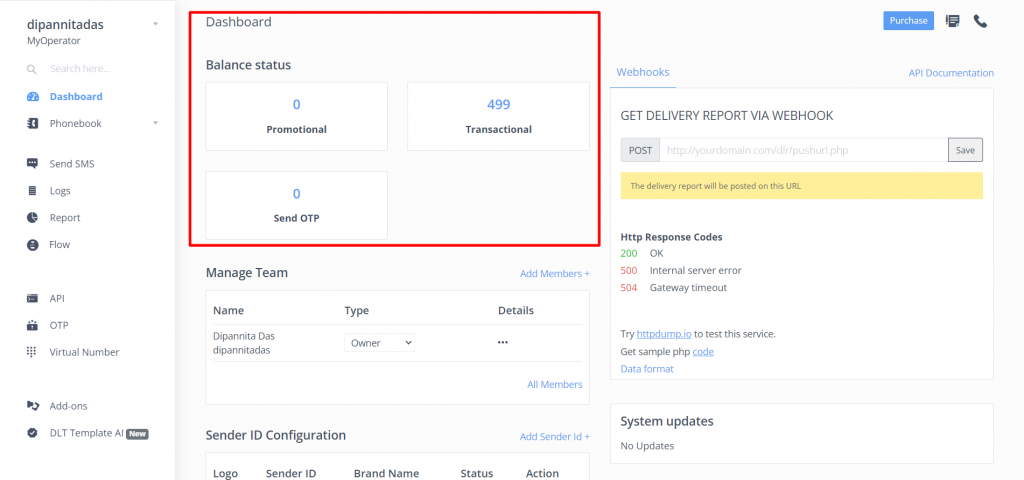
OTP SMS
OTP SMS stands for One-Time Password SMS. It is a form of transactional SMS that is used to send a unique and temporary password or code to a user’s mobile device. Online banking, account login, and other verification and authentication processes all frequently use OTP SMS.
When a user requests an OTP, a unique password or code is generated and sent via SMS to the user’s mobile device. By entering the OTP into the required field on the website or app, the user then completes the verification or authentication process.
Because OTPs are temporary and can only be used once, they provide an additional layer of security and aid in preventing unauthorized access to user accounts.
OTP SMS typically has a short expiration time that can range from a few minutes to several hours, depending on the specific use case. The likelihood of the OTP being intercepted or used maliciously is decreased as a result.
1. Advantages of OTP SMS
- Security: OTP SMS adds a layer of defense for user accounts and transactions, making it more difficult for unauthorized users to gain access
- Convenience: OTP SMS is a convenient way to verify and authenticate users without the need for additional hardware or software
- Cost-effective: OTP SMS is a cheap way to provide users with one-time passwords or codes.
- Versatility: OTP SMS can be used for a wide range of operations, including online banking, e-commerce, and account login procedures
2. Disadvantages of OTP SMS
- Short lifespan: OTP SMS has a short expiration time, which can create inconvenience for users if they do not enter the code promptly
- Dependence on mobile networks: OTP SMS depends on the availability and dependability of mobile networks, which can be impacted by factors like network congestion or poor signal quality
- Limited reach: OTP SMS can only be accessed by people who have mobile phones and can receive SMS messages
- Security concerns: Phishing attacks, SIM swap fraud, and other forms of social engineering are security risks to which OTP SMS is susceptible.
Overall, the high open and deliverability rates ensure the user gets the password or code for OTP SMS as soon as possible. OTP SMS is delivered straight to the user’s cell phone.
3. Suitable businesses for using OTP SMS
- Banking and financial services: Authenticate transactions, verify user accounts, and prevent fraud
- E-commerce: Authenticate logins and transactions to prevent fraudulent activities like credit card fraud
- Healthcare: Verify user identities to protect sensitive patient data in portals and apps
- Government agencies: Authenticate users for access to services and prevent identity theft
- Travel and hospitality: Authenticate reservations and payments
- Education: Authenticate users for online exams, assessments, and student portals
Overall, any business that needs secure and practical verification or authentication of user accounts, transactions, or sensitive information may benefit from using OTP SMS.
Compliance and Regulatory Guidelines
When sending any type of business SMS, you must adhere to regional regulations to avoid significant penalties and maintain customer trust. Here are the key guidelines to be aware of.
1. TRAI (India)
The Telecom Regulatory Authority of India (TRAI) requires all businesses to register on a Distributed Ledger Technology (DLT) platform. You must register your business, headers (Sender IDs), and message templates before sending any SMS to customers in India. Promotional messages also have strict sending time windows, typically between 9 AM and 9 PM. For more details, refer to the official TRAI website.
2. TCPA (United States)
The Telephone Consumer Protection Act (TCPA) governs telemarketing calls and texts. You must obtain "express written consent" from users before sending them promotional SMS messages. This consent must be clear and conspicuous. Transactional messages have less stringent consent requirements but must be directly related to a transaction or service. Learn more at the FCC's TCPA guide.
3. GDPR (European Union)
The General Data Protection Regulation (GDPR) protects the data and privacy of individuals in the EU. For sending promotional SMS, you need explicit, unambiguous consent that is freely given and can be easily withdrawn. The purpose of the messaging must be clearly stated at the time of opt-in. Non-compliance can result in severe fines. Review the official GDPR text for comprehensive rules.
How to Choose the Right SMS Type: A Checklist
Use this simple checklist to determine which SMS category fits your needs:
- Is the primary goal to market or sell a product/service?
- If yes, use Promotional SMS. Ensure you have explicit opt-in consent and respect sending time restrictions.
- Is the message triggered by a customer's action (e.g., a purchase, password reset)?
- If yes, and the content is purely informational, use Transactional SMS.
- Is the message for user verification, login, or transaction approval?
- If yes, and it contains a unique, time-sensitive code, use OTP SMS.
- Does the message contain any offers, discounts, or marketing language?
- If yes, it must be sent as a Promotional SMS, even if it is combined with transactional information.
In conclusion, the mobile-friendly world, the demand for personalized and real-time communication, the cost-effectiveness of SMS messaging, and the high open rates of SMS messages all contribute to the growing need for SMS as a communication channel for businesses.
SMS messaging will be a crucial business communication channel as companies continue to adjust to shifting customer needs and preferences.
Join for the blogs and insights

.avif)



.webp)


